Did you just read the first two sentences? Was it hard? I manipulated them by using different fonts and font sizes, which can affect the way our brain deals with this cognitive task. Cognitive scientists refer to fluency and disfluency in this respect, to indicate how easy (fluent) or difficult (disfluent) it is to process a cognitive task. My name is Nancy Coster, and for my NMD master’s thesis, I studied the effect of Virtual Reality (VR) on fluency and poetry appreciation.
Fluency theory and previous research suggests that we like easy-to-process stimuli better than stimuli that are difficult to process. Such stimuli can be all sorts of things such as faces, texts, or images. Thus, fluency comes in all shapes and sizes. In my master’s thesis, I focused on both perceptual fluency (e.g. visual/structural aspects of stimuli) and conceptual fluency (e.g. the meaning of stimuli).
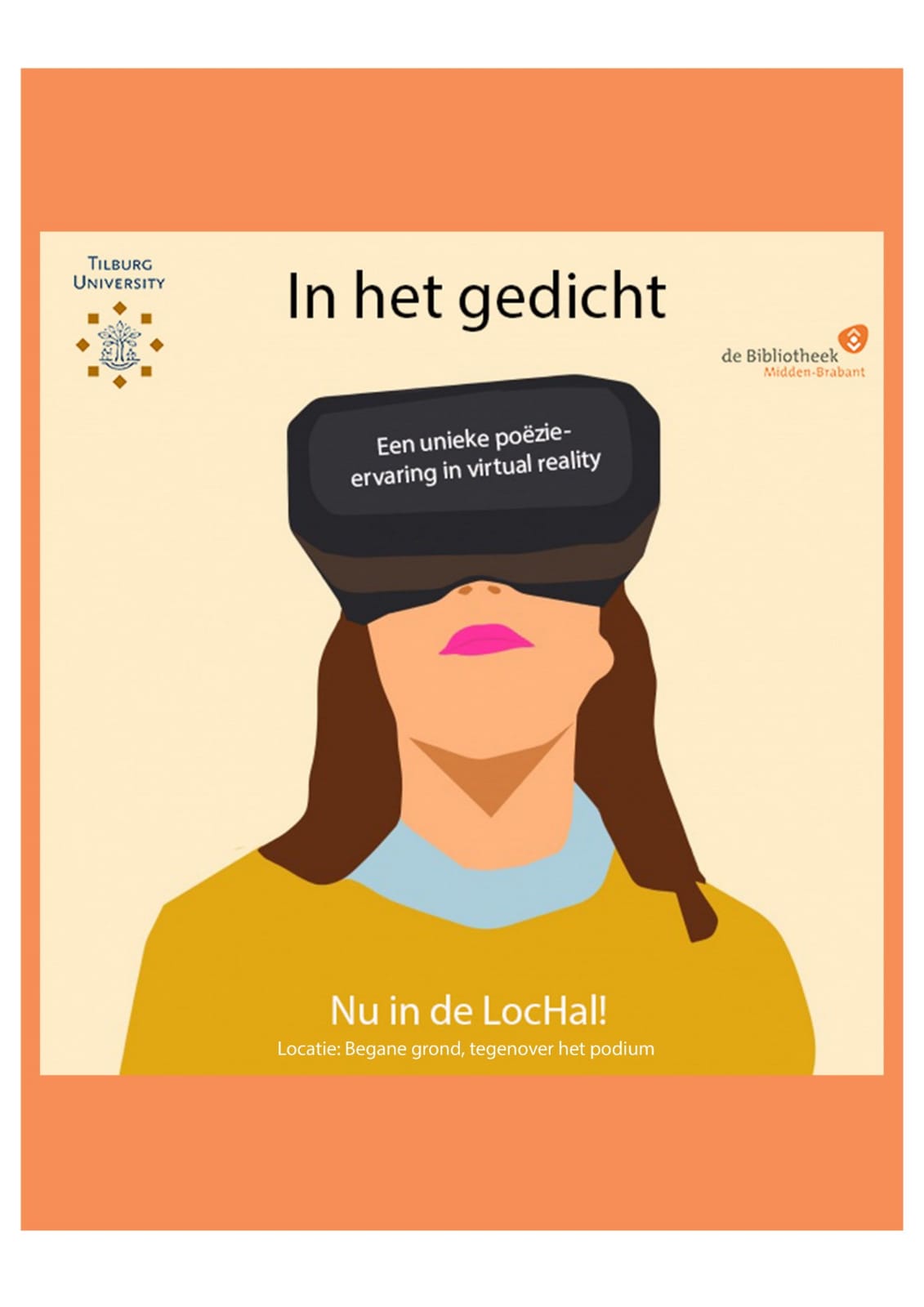 Although appreciation of poetry has been studied before, VR is a relatively new medium in this type of research. It is an interesting research medium in poetry research as poets are exploring new ways to showcase their work. Today, poetry is not only consumed by reading a poem printed in a book, but you can attend poetry slams, listen to poets, or hear a poem and simultaneously experience visual effects in a multimedia environment. VR offers interesting new ways to experience poetry. For instance, VR could make difficult poems easier either to understand by enhancing the perceptual characteristics or visualizing what the poem is about.
In my experiment, participants experienced poems in either a VR environment or an audio environment. In the VR environment, poems were manipulated in two ways. In the perceptual manipulation, the participants would see a color that would emphasize the structure or rhyme within the poem. In the conceptual manipulation, participants would see the poem depicted. Afterwards they would rate their general appreciation of the poem, as well as its flow, structure, topic clarity, and difficulty.
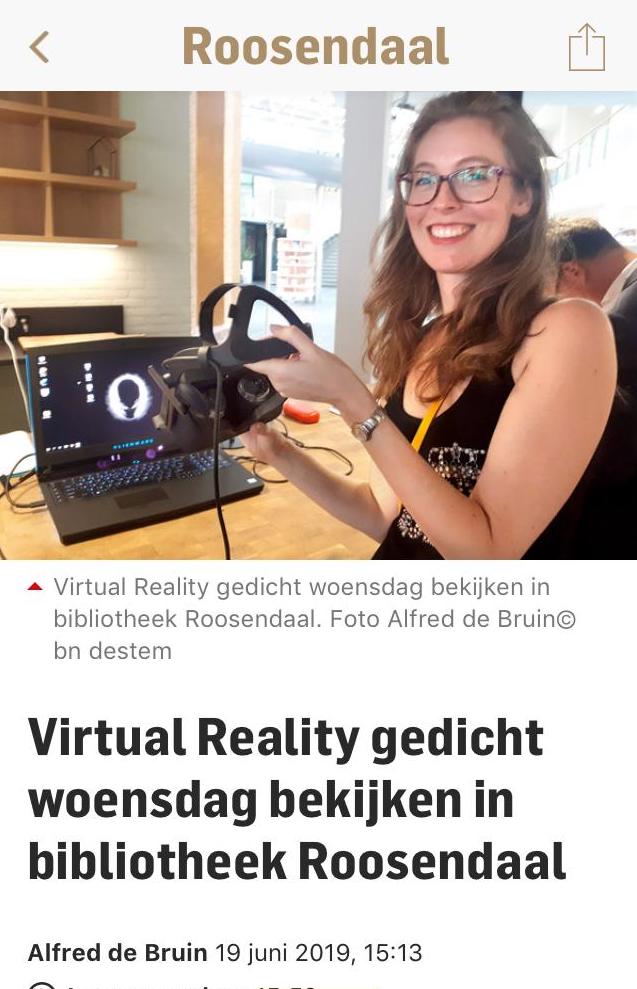 Thanks in part to several newspapers picking up on my research, I was able to conduct my experiment with 800 participants. The results showed that participants generally appreciated easy stimuli better than difficult stimuli. Interestingly, the results showed that participants preferred audio poems over VR poems. Several participants mentioned that this experiment was their first VR experience however, which could have affected these results. I also found an interaction effect for topic clarity in the conceptual poem manipulation; ratings for the easy poem were higher in the audio condition, whereas ratings for the difficult poem were higher in the VR condition. So VR seems to support experiencing a difficult conceptual poem and resulted in a higher rating on topic clarity.
The interaction effect I found for topic clarity in a difficult poem experienced in VR is very promising for future poetry applications. Just imagine: making difficult poetry easier for students when experiencing it in VR could perhaps help in a learning environment. Also, it could positively affect understanding and appreciation of poetry. And if Virtual Reality can be applied to the field of poetry, perhaps it could help in making other types of difficult content easier to understand as well.
Nancy Coster